

This post contains affiliate links. If you purchase through my links, I may earn a small commission at no extra cost to you.
Introduction: The Misunderstanding About Avoidants
There seems to be a misunderstanding that is circling the attachment spaces of social media, and it’s actually something that’s worth addressing because it can unintentionally leave a vulnerable group of people feeling powerless and stuck.
Yeah, you read that right.
There’s a common misunderstanding that avoidants are generally the reason why anxious-avoidant dynamics are so chaotic.

Why Anxious Partners Feel Like They Are Carrying the Relationship
As an ambivalent (anxiously attached), I actually do understand where this comes from. Ambivalents have a tendency to prioritize the relationship above all else–including our mental wellbeing. We are known to contort and twist and fold into a pretzel to accommodate our partners and maintain closeness in our relationships.
Our nervous system, which needs closeness to feel safe, prioritizes closeness and views distance or threats as threat level midnight (if you’re an Office fan). Meaning, when we sense any ruptures, we will do everything we possibly can to fix it.
In many ways, we can feel like martyrs. When we pour all of ourselves into our relationships and don’t get the same kind of effort reciprocated, we can feel deeply betrayed. As if we did all this work–we erased ourselves, and it still wasn’t enough for our avoidant partners.

Why We Seek Validation (& Why It Feels Right)
When we finally reach our limit, we come to attachment spaces for validation of our experiences. To know we are not alone, that we are understood by someone else.
Ambivalents rely on external validation of our experiences because we learned not to trust ourselves. It stemmed from having our emotional realities questioned and constantly told we were “too much” or overreacting. Our sense of self trust was eroded, and in turn we need others to reassure and validate our feelings and emotions. That’s why we are deeply sensitive to being misunderstood (hence those Walls of Text trying to explain every tiny detail to be understood).
When we seek out support in attachment spaces, we want to know that we weren’t crazy—that it wasn’t us, it was our partners. So the room suddenly becomes an echo chamber of people validating each other’s experiences because our experiences were similar—after all, all we did was want to be loved.
Validation as a Trap
Validation is a big part of the healing process. Being seen and heard restores a sense of safety within us. The problem is when these echo chambers create certainty that we have not contributed to the relationship dynamic at all.
This does two things.
One, it makes us feel helpless. We can’t do anything to change it! We have to fight and push our partners to change, and they get defensive and turn it back on us. How we caused their behavior. Does this sound familiar? So we get stuck. Frustrated. Angry. Lonely. Upset. Isolated. At the mercy of our partners’ willingness or unwillingness to change.
The second thing it does is leave us blinded to our own behaviors, to our own faults. Don’t get me wrong—we are highly critical of ourselves, unfairly so. I’ve found, however, that the “faults” I tend to focus on are actually things I can’t change. I wonder why that is?
You can see, then, how easily it is to fall prey to the idea that the problems are always caused by the avoidant partners.
The Part Nobody Wants to Talk About: How We Contribute to the Cycle
Here is the hard part, though. Self-abandonment doesn’t increase intimacy and closeness. It doesn’t make relationships better. We were contributing to the unhealthy dynamic in the relationship. Suppression isn’t 100% leakproof. Our resentment, our anger—all of that comes out in unhealthy ways. It builds up. It erupts.
It’s easier to point the finger. At the end of the day, though, we can only change ourselves. When we change how we respond to the same situations, then we change the entire dynamic of the situation. This forces our partners to to either change with us or remain stuck in a dynamic that you are no longer participating in.
That’s the only way to approach attachment healing.
It’s also the most difficult. Because we developed adaptions of behavior (deactivating/hyper-activating) for survival and to protect us, looking at ourselves honestly can be incredibly destabilizing. So most people—regardless of attachment—find change or taking accountability very difficult. For good reason, obviously.
But anyone who is insecure is insecure. Ambivalent attachment is rooted in behaviors that are detrimental to ourselves and to our relationships, just like many avoidant or disorganized behaviors.
Recently I was watching Diane Poole Heller talk at a summit, and she said something that threw me for a loop. She said that she had an ambivalent client come in who could only complain about her partner and what he was always doing wrong. Every time Heller tried to get her to come up with what he did that she appreciated, she kept getting annoyed and returned to listing what he did wrong.
Heller kept redirecting her back to his positive qualities until the client said, “Well, I guess he does call me every evening when he’s on a business trip to ask me how my day was.” She even seemed surprised at herself.
Eventually they were able to make a list of things he did that were positive. They wrote them all down on cards and set them out on the table before the client. Heller, then, had her take each card that represented his show of care and love one at a time and receive the love in them.
And what happened?
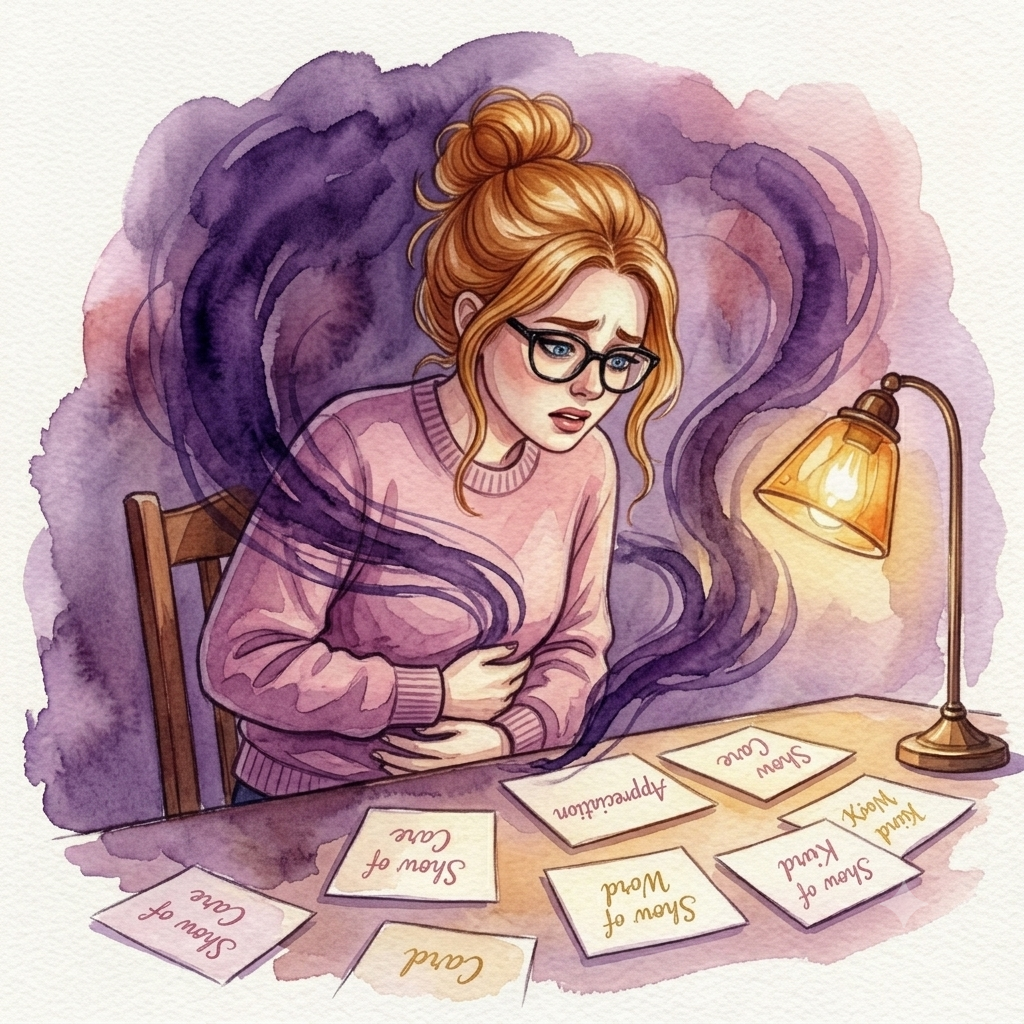
The client got a stomach ache. She felt physically sick. She felt like something bad was about to happen. Like the other shoe was about to drop. Like she couldn’t trust the love that he was giving her because any moment their relationship would sour.
I found that fascinating because it sheds light on the critical views that ambivalents tend to have toward their avoidant partners, particularly after the initial spark fades.
You’re scratching your head right now because you love your avoidant partner which is why their inability to match your love is so painful. Let me explain.
We enter into relationships fully expecting (subconsciously) to be rejected or abandoned. Therefore we are always watching for any possible threat to our relationship. Any proof that our partners don’t love us, don’t care for us, don’t listen to us—that they are cheating or lying or anything that could cause an issue.
We are so concerned with looking for these signs, that first, everything looks suspicious, even perfectly normal behaviors (going out with a group of friends on a Friday night, for example).
Second, we cannot be present in the moment long enough to receive and enjoy the love. For that exact reason that Heller’s client couldn’t—because she inherently braced for abandonment or rejection because that was what she learned was always going to happen.
The sad truth is that our behaviors can work a lot like self-fulfilling prophecies. So if we are always going to be looking for lies, we might interrogate our partners and make them feel like they have to put together a full defense for a judge every time they want to hang out with their friends. While lying is never okay, another person with insecurities (an avoidant) will react to this in their own ways—and may actually start lying just to end the conversation as soon as possible.

The truth is that avoidants and ambivalents mirror each other’s insecurities, so they are triggering each other’s worst behaviors. It’s really not one is worse than the other. Avoidance can be destructive to relationships, but ambivalence absolutely can be destructive too.
I can literally go on forever about this. So I’ll stop now to spare you a 1,000 page dissertation.
Further Reading
Diane Poole Heller’s The Power of Attachment — one of the best books for attachment. Heller is currently my new favorite attachment expert. She is the creator of the DARe method and has one of the most compassionate ways of speaking of attachment.